


Archive for December, 2006

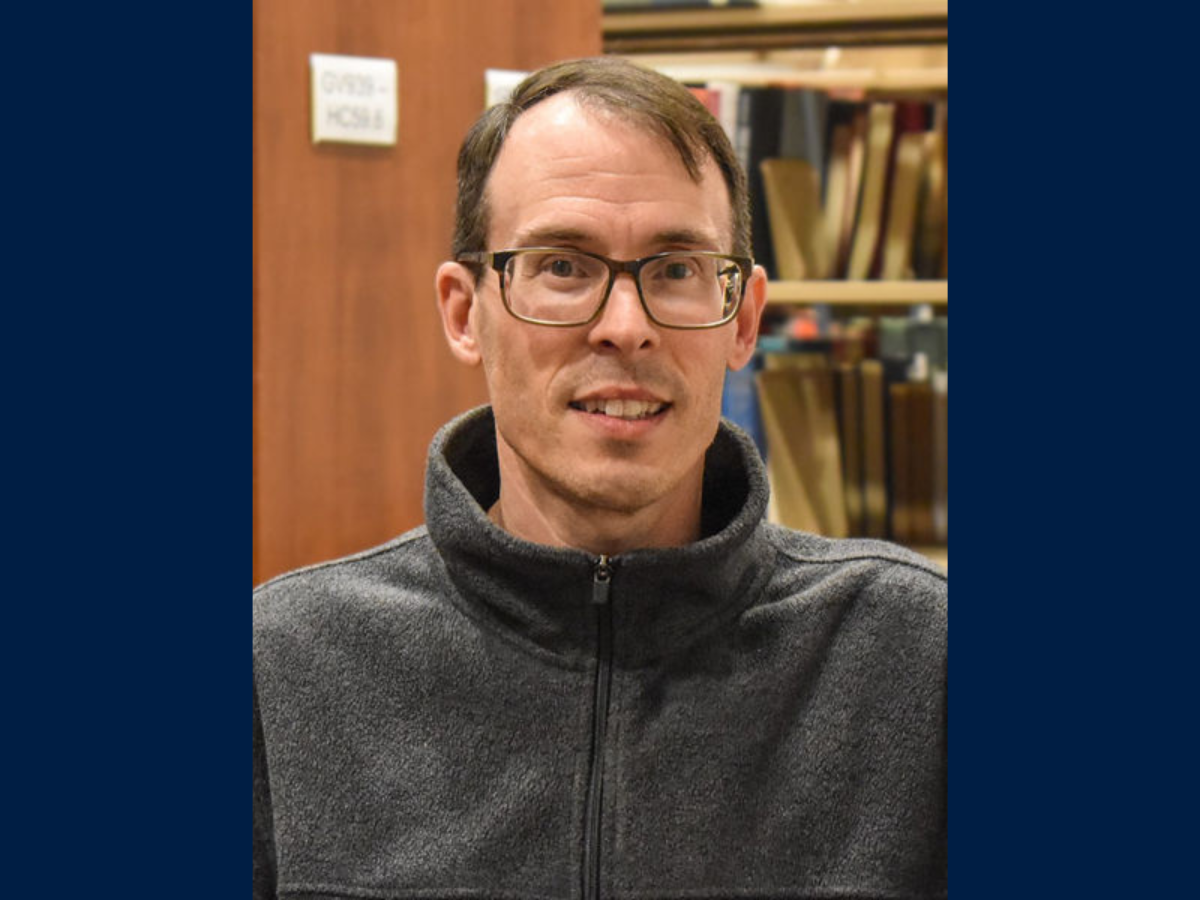
Wayne Mackintosh and Eric Feinblatt Visit Penn State

Friday, December 29th, 2006

On December 7 and 8, 2006, Penn States World Campus and Alliance for Earth Sciences, Engineering, and Development in Africa (AESEDA) co-sponsored visits from Dr. Wayne Mackintosh of the Commonwealth of Learning (COL) and Eric Feinblatt of the SUNY Fashion Institute of Technology.

In the opening session on December 7, Dr. Mackintosh and Mr. Feinblatt co-presented Big Ideas and Working Programmes: Internationalization of Education, Development, Partnership, and the Role of Open, Flexible, and Distance Education to approximately 30 Penn State faculty members, administrators, students, and guests, gathered in the Penn State Outreach Building. The presentation was followed by comments and discussion led by Penn State professors Dr. Michael Adewumi and Dr. Michael Moore, and then a period of open discussion.

Dr. Mackintosh made an impassioned presentation on the nature of free software and education materials, the moral implications of freedom, and the criteria that help define free and open software and content. Wayne cited Richard Stallman of the Free Software Foundation for guidelines to help define free as it relates to software, including:

  • Freedom 0 - Use: The freedom to run a program, for any purpose
  • Freedom 1 - Help Yourself: The freedom to study how a program works, and adapt it to your needs (Access to the source code is a precondition for this).
  • Freedom 2 - Help Your Neighbor: The freedom to redistribute copies
  • Freedom 3 - Help Your Community: The freedom to improve the program, and release your improvements to the public

Mackintosh then referred to the following meaning of freedom as it relates to educational content, defining “the terms ‘Free Content’ and ‘Free Expression’ as any work or expression which can be freely studied, applied, copied and/or modified, by anyone, for any purpose.”  To be recognized as free under this definition, a license must grant the following freedoms without limitation:

  • The freedom to study and apply the information: The licensee must not be restricted by clauses which limit their right to examine, alter or apply the information. The license may not, for example, restrict “reverse engineering,” and it may not limit the application of knowledge gained from the work in any way.
  • The freedom to redistribute copies: Copies may be sold, swapped or given away for free, as part of a larger work, a collection, or independently. There must be no limit on the amount of information that can be copied. There must also not be any limit on who can copy the information or on where the information can be copied.
  • The freedom to distribute modified versions: In order to give everyone the ability to improve upon a work, the license must not limit the freedom to distribute a modified version, as above, regardless of the intent and purpose of such modifications. However, some restrictions may be applied to protect these essential freedoms, as well as the requirement of attribution. (Taken from the Free Content and Expression Definition site)

For additional information, please visit the Free Content and Expression Definition site.

Wayne also took the time to introduce his work at the Commonwealth of Learning (COL), and a few interesting projects such as tuXlab, Commonwealth Computer Navigator’s Certificate, and eXe.

Eric provided a video-based description of a recent educational theatre collaboration that he participated in with the Theatre for Development Project in Lesotho, Africa, addressing issues of gossip, silence, and HIV/AIDS.

On December 8, approximately 15 members of the Penn State community gathered with Wayne and Eric to discuss what it means to be a Global Land-Grant University. Topics of discussion included:

  • Educational, Outreach, and Development Activities in Economically Developing and Least-Developed Societies;
  • The Role of Open Educational Resources including Open Source Software;
  • The Role of Open, Flexible, and Distance Education in meeting the mission of a Global Land-Grant University.

Materials from Wayne’s and Eric’s visit, including audio recordings, will be posted here in early to mid January; in addition, an outline of the sessions will be posted on WikiEducator for general viewing and collaborative development by all who attended the sessions. Check back for links to these resources.

If you are interested in learning a little more about Wayne and Eric, take a look at the short text-based interviews we conducted before their visit.

Redefining the laws of physics in South-Central Pennsylvania

Wednesday, December 27th, 2006

Yes, I know, I am taking some liberties with this posting, but aren’t the holidays a time for fun and levity? Although this is not about eLearning specifically, it is about “Terra Incognita” – the unknown territory. I recently took the opportunity to experience some of the wonders of South-Central Pennsylvania. Although the Keystone State is better known for being the home of Benjamin Franklin, the Johnstown Flood of 1889, and Amish communities, it is also the site of Gravity Hill, a place where the basic principles of gravity, (a notion that has made its way into much of modern thinking) do not completely apply. Gravity Hill is simply a road in the middle of nowhere, which is probably why the rules of nature have been suspended. Park your vehicle in the right spot, put it in neutral, remove your foot from the brake, and the vehicle will roll backward uphill. I have experienced this sort of thing before at Magnetic Hill in Moncton, New Brunswick, Canada, but somehow found the phenomena more satisfying at Gravity Hill.

If you make the trip, be sure to observe official Gravity Hill protocol:

  • Check your rearview mirror before doing the hill backwards.
  • Never turn around in the “local’s” yards.
  • Wave and smile when folks pass by.
  • Let folks by if they’re trying to get past you.

Finally, be patient while driving there – and take along a good navigator. The directions on the Web site are not the greatest, but I guess that’s really part of the fun.

Whether you spend it rolling backward up Gravity Hill or with family and friends, have a safe and peaceful holiday season.

More Introduction-Ken Udas Continued, Part 3

Monday, December 18th, 2006

Continued from Introduction, Part 2… These were the halcyon days of online education for me. There were no approvals, or administrative overhead; I was the instructional designer, course developer, and teacher/facilitator; nobody really knew what I was doing, so I did not have to ask permission. There was immediate gratification.

This post is getting a bit long, so I will break it up into another… and here it is…

While I was working in Slovakia at Comenius and for the UMUC, European Division, I was also teaching as an adjunct professor at the International University of Vienna, which at the time was called the International Christian University (ICU)—founded decades earlier as a mission of the Church of Christ. By the time I arrived in 1996 ICU was more college than mission, offering a reasonably secular curriculum of business programming on the undergraduate and graduate levels. I would guess that around a third of all our learners were Islamic, about half had spent some of their lives in an environment that included military conflict, around 90% were from economically developing or least-developed societies, and many were in Vienna on refugee status as a result of the Balkanization of the former Yugoslavia and violence in east central Africa. As you can imagine, the student body was absolutely fascinating.

The first class that I taught at ICU was an evening graduate course supporting the master’s degree in International Business Management. It was a survey course titled something like International Business Relations. In typical lecture fashion I found myself standing at the front of the class addressing 20 or so learners, facilitating introductions and reviewing the course syllabus. While reviewing the course protocols and assignments I touched on the fact that papers were to be individual efforts and that too much collaboration among learners in the class would be considered cheating. Within a few seconds of making this point a gentleman sitting toward the back of the room raised his hand and informed me that the standard at ICU was that papers were done in teams. As I learned later, the vocal student was a “dominant” male force in the program named Ali, who was from Southern Lebanon. While debating with Ali about my pedagogical rationale for having some independent (non-group) work assigned to the class, I noticed that a number of the half-dozen or so women wearing headscarves were sitting quietly in the very front of the class, moving their heads side-to-side, slowly, eyes cast down, so as not to draw any attention from the male and Western students sitting behind them. Their behavior told me that Ali was trying to take advantage of my being a new faculty member and that I should not take his assertions as fact. This provided a hint that there were dynamics within the class that I was not accustomed to.

During the next few semesters I noticed that a single comment by a male student would quiet a female’s argument or dialog. I also noticed that when two males would have a disagreement, it could be very disruptive, resulting in intense and incessant bickering. It was in large part because of these dynamics that I first started thinking about the use of distance technologies to enable more open discussion. I had gotten a National Center for Supercomputer Applications (NCSA) “collaboration tool” called Habanero installed, but we could not get our deployment to run reliably enough to actually use it. The idea was to create an opportunity for anonymous interaction among students, reducing the role of status in social interaction. As a poor substitute, we used Web e-mail to facilitate some discussion. This way the learners could open their own accounts and communicate without exposing their identities. Although Web e-mail did not work very well, it was under these somewhat challenging circumstances that I started seriously and practically thinking about the pedagogical and social impact of online learning. Until this point, the reason for online learning from my perspective was about achieving enhanced access in a rather traditional and obvious sense (geography and mobility), not about the impacts of cultural norms on “access” and expression—in this case, access to the learning process with equal status.

Well this post is getting too long. All of my online learning experience to this point was very craft-like. My use of online learning at the University of Maryland, European Division, Comenius University, and ICU had been very independent. There were few organizational expectations about scalability, quality, and service. This, of course, had to eventually change. More on this in future posts.

Once again, if you would like to share your experiences, please feel free to post comments, or write and submit your story.

Interview with recent presenter Eric Feinblatt

Tuesday, December 5th, 2006

How did you make the transition from fashion photographer to instructional designer?

There were a few steps in between–I left Paris in 1989, where I had been working as a photographer (not just in fashion) for ten years, and moved to New York. I had tired of the world of applied art, and was looking for something else to do. By luck and coincidence I was introduced to an administrator at Cooper Union and ended up designing the photography courses for their Extended Studies program. My teaching career began there. In the nineties, faculty development, instructional design, and teaching with technology were an alphabet soup, and usually the person who was the most comfortable with technology was able to run the whole shebang. After a few years of teaching photography at the Fashion Institute of Technology, that person became me, and that’s how I started. For most of us in the business, it’s been a learning-as-we-go process.

How do you define visual pedagogy and what is its impact on online learning?

I don’t know how to specifically differentiate the impact of visual pedagogy on an online learning environment from its impact on any other learning environment, because that impact has the potential to be so tremendous on both. After all, the notion of visual pedagogy springs from a recognition that ideas and ideologies shape images, and images shape ideas and ideologies. It is a self-perpetuating pas-de-deux that affects the way all of us process information and make meaning from that information, particularly in image-saturated societies. Images contain codes to all sorts of cultural presumptions. It is perilous, as educators, to ignore them.

Did you meet with any resistance from the government or community when bringing your theatre project to Lesotho, Africa?

Not at all. The rural mountain villagers whom we worked with in Malealea were already participating in a local development project and understood the potential value of such projects.

Interview with recent presenter Wayne Mackintosh

Monday, December 4th, 2006

We would like to take this opportunity to introduce an upcoming visitor to the World Campus. Wayne Mackintosh will be a presenter at an event called “Big Ideas and Working Programmes: Internationalization of Education, Development, Partnership, and the Role of Open, Flexible, and Distance Education”; the presentation will be followed by a panel discussion. The following is a text interview we conducted with Wayne to provide you with some information prior to his visit.

What challenges do you face when providing free software for education to developing countries that may have limited resources to make use of the software?

The Global Software Piracy Study reports that 35% of packaged software installed on personal computers worldwide is illegal. The piracy rates in developing countries are typically around the 80% mark. This is disconcerting, because citizens in the developing world are both passionate and determined to participate in our knowledge society. They do not wish to be on the wrong side of the digital divide. The desire of the developing world to be equal participants in our global economy often outweighs the moral dilemma of being tempted into the illegal use of pirate software for lack of funds and resources.

On the positive side, there is no need for anyone to infringe copyright restrictions, because all the applications we require for educational purposes are available as free software. Our biggest challenge is an educational one. We need to educate policy makers and practitioners that there is a free choice when it comes to software. There is no need for cash-strapped educational institutions to be locked into expensive license agreements or, worse, be tempted into the illegal use of pirate software.

The lack of financial resources, limited infrastructure, and exorbitant connectivity costs–which incidentally are considerably more expensive than the U.S. costs for bandwidth–amplify the resolve of the free-software and free-content community working in the developing world. For example, the total cost of ownership of free software (which includes the support and maintenance costs) is lower than the cost of non-free equivalents. The implementation of free software solutions promotes growth of local business and local income for support services rather than relying on expensive offshore alternatives.

Advocates of non-free software assert that the costs of supporting open source software are excessive. This is a myth. The fact is that at the institutional level both proprietary and free software need support and maintenance strategies. The difference is that free software users always have the freedom to get their support from the community, as an alternative to corporate services. I, for example, use only free software. I’m an educator by training and not a computer programmer, yet I have been able to support myself without incurring any expenses for my employers regarding the support services associated with my personal desktop. On the rare occasion I have a technical problem, I know that the solution can be found in one of the free software forums. Once you know how to search properly, you will inevitably find a step-by-step, copy-and-paste solution to your problem.

However, my motivations for using free software have little to do with cost savings but are deeply rooted in the democratic principles associated with the freedom of choice I gain by using free software. I am free to use and discard the multitude of packages and applications I have at my disposal, but, more important, I can share the programs I have found useful with my friends and the wider community. I would strongly encourage you to experiment with free software, because you are free to do so without any restrictions!

There are innovative projects in the developing world that set up computer laboratories using a Linux-thin-client approach, whereby refurbished computer terminals are used as desktop client machines that access software installed on a central server. This is a smart investment because funds are directed to new technology at the server end without unnecessary wasteful spending on expensive clients (desktops). These laboratories have demonstrated significantly lower costs when compared with “fat-client” installations of new computer laboratories using non-free software (see, for example, Tuxlabs and SchoolNet Namibia).

There are two ways you can look at the problem associated with the lack of ICT infrastructure in developing-society contexts:

The first approach is to take limited infrastructure as the point of departure and then design solutions widening access to education using legacy technologies. Personally, I feel that such an approach is unethical. Why should the developing world have to settle for outdated solutions that the industrialized world has jettisoned, simply because of access challenges? We have learned from the history of the First Transcontinental Railroad, built across the United States in the 1860s. At the time of taking rail transport west, there was no demand for this service. However, the provision of this infrastructure generated demand for economic growth across the United States. Similarly, why should the developing world have to wait until the Internet railroad is built? Shouldn’t it be the other way around?

The alternative approach is to accept the social inclusion and participation of all people in our networked society as a point of departure. This means that access to ICTs is a fundamental right of knowledge citizens–not an excuse for using old technologies. Free software understands and recognizes these rights, and we believe that by generating demand through the development of free digital content using free software, access to infrastructure will follow naturally. I agree with Sugata Mitra (ppt file) that we should take the most advanced technologies to our most disadvantaged learners.

In conclusion, I think that one of the real challenges in the developing world is the need for capacity building in basic ICT skills–for example, word-processing, spreadsheet, and Internet communication skills. This is not a free software challenge in itself, but the Commonwealth of Learning (CUL) has announced the institution of a Computer Navigator’s Certificate focusing on free software. This initiative will widen access to ICT skills training using free software and will be distributed as free content for anyone to use, modify, and distribute. I’m delighted to learn tha Penn State is keen to assist us in this important project, and we will benefit from the depth of the instructional design experience of the World Campus. Penn State will also benefit from this project because the resources could be used as an alternative for ICT skills development for World Campus students choosing to use free software for their studies.

How do you address the varied cultural and language needs of the different countries you serve?

This is a significant challenge because education is culturally bound. Fortunately the licensing of free content and open education resources enables local communities to adapt, modify, and redistribute educational resources. Using free software tools, member states of the Commonwealth can recontextualize and localize open education resources for their own needs without restriction.

I should point out that there is an inverse relationship between pedagogy and the reusability of digital learning resources. The more pedagogy you embed in a digital learning resource, the less reusable it becomes in different cultural contexts. This is why it’s important for us to prioritize the refinement of educational tools that will make it easier for educators to recontextualize the “pedagogical voice” of open digital learning resources for different learning contexts. We have made good progress with free software tools, like the eLearning XHTML Editor (eXe), that package and structure learning content by identifying the educational sub-elements of a learning resource–for example, learning outcomes, case studies, learning activities. Once you identify the form and structural elements of the pedagogy of a learning resource, it becomes easier for educators to localize eLearning resources for different contexts. I will be exploring opportunities for collaboration between the Commonwealth of Learning and Penn State to unleash the pedagogical potential that digital technologies offer for the future in this regard.

On the language front, free software and free content provide exciting opportunities for localization. For example, the eXe authoring tool has been translated into seventeen different languages through contributions from the community. I have recently learned of a project on www.WikiEducator.org that is translating COL’s eLearning Guide into Dutch, and the eXe user manual hosted on WikiEducator has been translated into Italian. This is a unique feature of the open source development model, because anyone has the freedom to translate projects into different languages. This is a constructive way in which developing societies can participate in open projects as equal partners with the added benefit of acquiring psychological ownership of the development concerned.

What do you do to ensure course quality when WikiEducator has content that is open to “anyone to edit and use”?

In jest, my standard response to this question is that “I would far prefer having access to a ‘poor-quality’ resource where the licensing provides me with the freedom to improve and modify the resource to achieve relevant quality standards over having access to a ‘high-quality’ resource that restricts me from adapting it for my own educational purposes.”

This is not intended as a rebuttal to the importance of quality in education, but highlights the fact that quality is like beauty–it is in the eyes of the beholder!

WikiEducator uses similar editing approaches and the same software (MediaWiki) as Wikipedia, the world’s largest free online encyclopedia. The MediaWiki software we use for WikiEducator records every edit made on the site. So while everyone with a registered account on WikiEducator is free to make changes to content on the site, every registered user also has the freedom to revert to previous revisions of any article on the site, using the recorded history that is maintained for every page. This puts quality firmly in the hands of the community–not the technology. Therefore, if the quality of WikiEducator content is questionable, then we have only ourselves to blame.

In 2005 the popular science journal Nature conducted a study comparing the accuracy of Wikipedia entries of selected science articles with the Encyclopedia Britannica. No significant difference was found in the accuracy of Wikipedia articles when compared with the Encyclopedia Britannica. Of particular interest is that reported inaccuracies in Wikipedia were corrected online immediately, while the identified errors in the Encyclopedia Britannica are destined to wait until the next print run of the publication.

Technically, it’s a simple matter to establish processes for academic peer review of educational content on WikiEducator. However, the quality of resources will ultimately be determined by the levels of participation by the academic community. Therefore, I ask the community to help us achieve the quality standards that will satisfy the reflective skepticism that has ensured the success of the university community. That said, we will need to find ways to effectively communicate the status of a resource on WikiEducator. The instructional design process recognizes that development of learning resources is a cyclical process involving repeated cycles of improvement. We have ascribed to the same processes on WikiEducator, and we must collectively find ways to ensure that this becomes the norm for content development on the site.